Showing posts with label 1940s. Show all posts

Friday, 10 July 2015

VINTAGE: Thiel College Yearbook 1946

Thiel Thiel Thiel Thiel Thiel
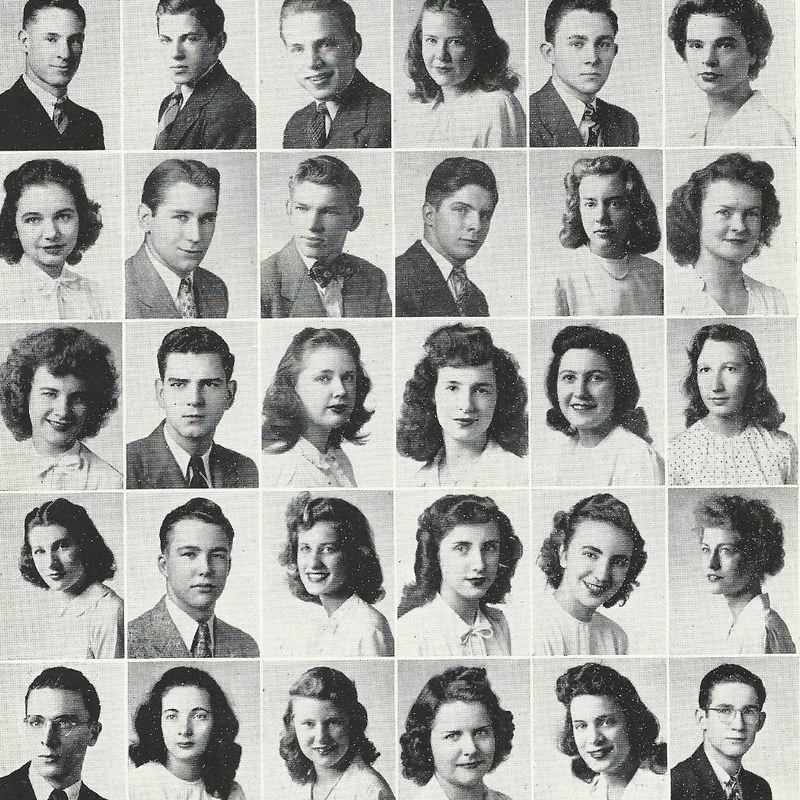
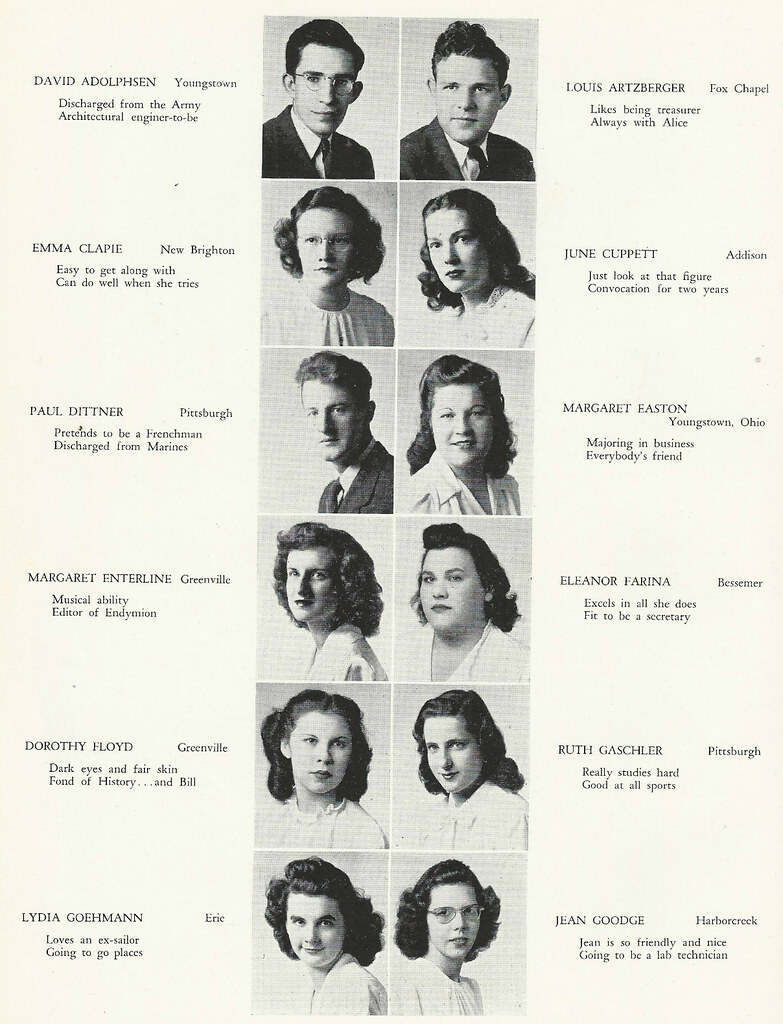
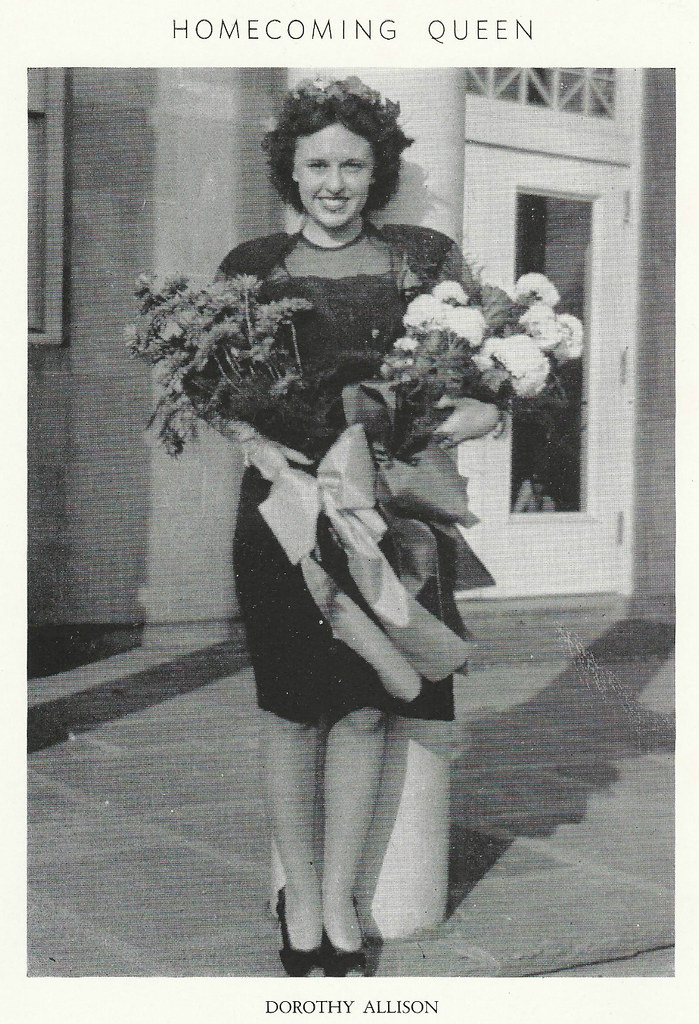
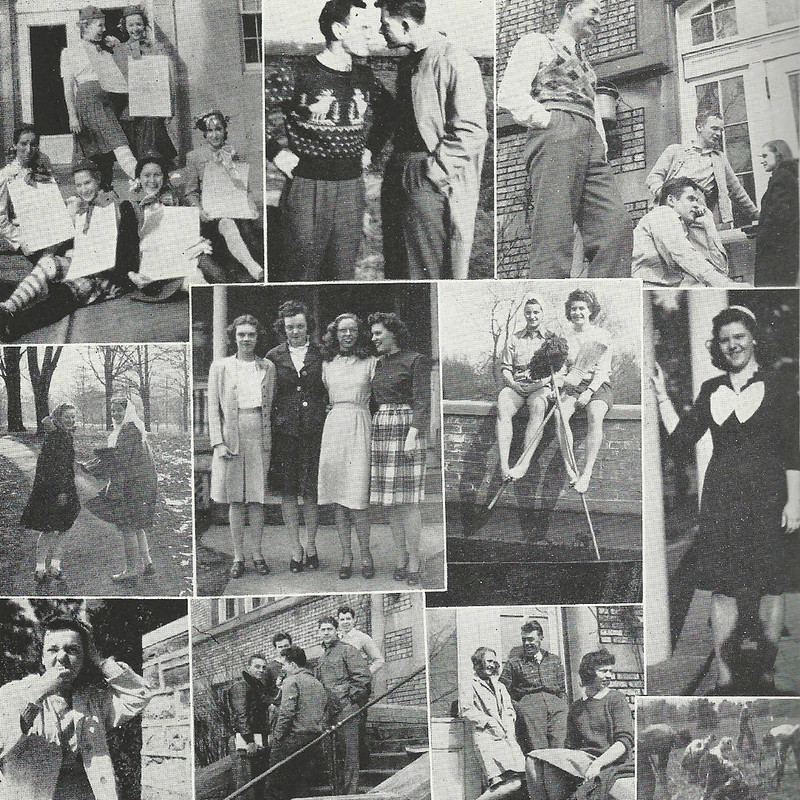
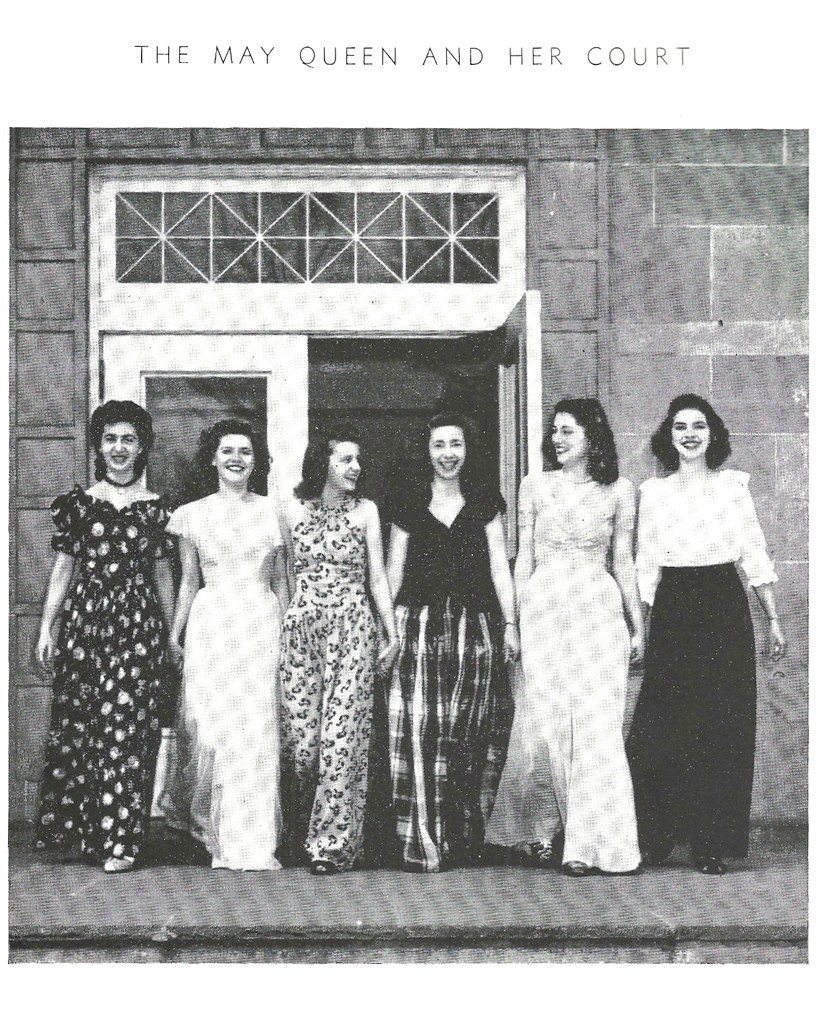
This 1946 yearbook from Thiel College - a liberal arts college in Greensville, Pennsylvania has become one of my favourite estate sale finds of late. It came from residence here in Metro Detroit, but with a basement filled with lots of Pennsylvania based cookbooks and history. I have to admit, I love pouring over the collages of photographs, reading the somewhat charming and often sarky captions.

Of Dorothy - "fond of history and Bill", to Lucile with a "new hair-do every week". To Suzanne who "has a husband ... lucky girl" and of Norman, a Detroit lad who "treats all women alike", whatever that means. Patricia "used to read a book a day"  and Louis well he's "always with Alice".

But those hair styles and dresses - those are the winners in my book.

Monday, 15 July 2013

VINTAGE: Fred and Ginger


The Barkley's of Broadway, released in 1949 was the film that reunited Fred Astaire and Ginger Rogers after 10 years, but it was also their last film together. You could say these two sparkled my interest in vintage, especially the 1930's era, I loved watching their black and white dance moves as a child and I still continue to rewatch and love them. 

Hunting through a box of vintage (original) advertisements at the Royal Oak garage sale yesterday, I was hoping against hope their might just be a Fred and Ginger one. And there it was, the very last advert. The Barkley's of Broadway was actually the only film they did together that was filmed in colour and it was original intended that Judy Garland would be performing alongside Fred as she had done in Easter Parade, however her health wouldn't permit her to be the star of this movie which follows the drama of husband-and-wife musical comedy team Josh and Dinah Barkley.

All it needs is a frame and place on the wall!

Thursday, 4 July 2013

VINTAGE: Women and World War 2

Image Source

I got rather excited when Joe shared this photographs with me from yahoo yesterday - these gorgeous colour photos were produced by the US Office of War Information during WW2 and beautifully remember the all important role women played during the conflict. Taken during 1942 to 1943 by Howard Hollem and Alfred Palmer they were left to the Library of Congress in 1944. 

On a day were we remember our independence in the US, it's fitting to remember the importance women's work during the war that maintained that freedom, both in the US and in the wider world during this era. You can see the rest of the collection through yahoo here

Tuesday, 28 May 2013

VINTAGE: Bears in Bar Harbor

Life has been extra busy since we've been pushing harder with our store, so after I've done all my work I'm finding it increasingly challenging to get driven enough to do anything extra on the computer. So blogging has taken a hit, again. The last couple of days have been spent scanning, researching and working my way through a couple of hundred vintage postcards we picked up a couple of weekends ago - even a couple over 110 years old and never used. 
I thought I'd share with you one of my favourites that I have on hand - this gorgeous vintage linen (named so because they have a rag content to them) Curteich postcard which was published in 1947, postmarked in 1949. One of the things I love in particular about linen postcards (popular between 1930's to 1960's) is the richness of their colours and their texture makes them extra special. I could probably bore you all to sleep with some of the postcards I've come across lately, they intrigued me immensely.

Whenever I work on vintage postcards, it always make me remember how much of a shame it is that we don't mail postcards like we use too.

Wednesday, 8 May 2013

VINTAGE: By the People, For the People 1936-1943

When I came across a post on the Knitting on Trains blog showcasing some gorgeous prints uploaded by the Library of Congress, I just knew I'd be spending hours, if not days pouring over the libraries collection of vintage prints, photographs and images. It's only right to share, so over the next coming weeks and months I want to share some of them with you starting with WRP posters as they cover my favourite vintage eras - the 1930's and 1940's. I'm so excited to share these with you.

The Works Projects Administration (WPA) poster collection consists of over 900 of the original 2000 graphic, bold and diverse posters produced between 1936 to 1943 as part of President F. D Roosevelt's New Deal. With a mixture of lithograph, silkscreen and woodcut posters, they were designed to advertise cultural exhibitions, health and safety programs to travel and tourism in an America dealing with the remnants of the Great Depression. These posters were used in seventeen states including California  Illinois, Ohio, New York and Pennsylvania. While many of the WPA designs were created for the war especially aimed at women, they are worthy of a post just for those, so keep an eye out for the next set of prints.

Click through on any of the images for their source. 

Photographs, second annual exhibition, Sioux City Camera Club.
Iowa, published sometime between 1936 - 39

The Buckingham Fountain on Chicago's lake front - the "world's largest
and most beautiful illuminated fountain", published 1939
Visit the Brookfield Zoo - Illinois, published between 1936 - 38
Children's Drawings, Ohio 1939
Pennsylvania farming landscape by Robert Muchley, 1936 - 41
The United States First Foreign Trade Zone - Staten Island,
New York City, opened in 1937
These are only 6 of 900 prints they have online and I paritculary love the visit the zoo series of print they have within the WPA series. I could have shown you so many more so I encourage you to take the time to explore the prints on the Library of Congress website, there catalogue's are vast and certainly worth a visit. There's even some 1800's British cartoons uploaded too. Next up i'll show you some of the War Time WPA posters.

Monday, 6 May 2013

VINTAGE; In 1949


One of the finds of the weekend was this promotional photograph from Grinnell's a once famous organ and piano maker from Detroit. Established in 1882 as "Grinnell Brother's", they sold upright, baby grand and player pianos until they were declared bankrupt in 1981. Nevertheless by the 1930's Grinnell's were the suppliers for the pianos and organs in the annual Michigan Music Festival which claimed to be the world's largest piano recital which for decades had attracted more then a thousand participants. The festival was held  over the years between the State Fair Coliseum, Olympia Stadium and then the Cobo Hall until the festival was stopped in 1973.

The image I manged to find from an estate sale is dated to 1949, Grinnell advertising lines around the ring and row upon row of pairs of players line the hall floor. What I love most is the little girl in the foreground standing right before the railing of the balcony on which she stands. Even though we're seeing her figure from behind, she appears so captivated by the piano playing before her, and her dress, well that seems extremely pretty. It makes you wonder who she is, and even if she is still alive.


I can't wait to get this photograph framed and up hanging on my wall. 

If you're intrigued by the Grinnell story I came across this great resource from the Historic Detroit website which gives more insight in the history, photographs of their buildings from around Detroit, and later the social changes which ultimately sealed the fate of Grinnell's. 

Wednesday, 6 March 2013

Atlas

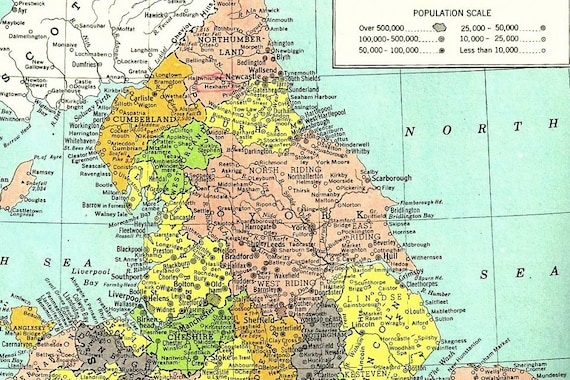
Close up of Yorkshire and the North of England - Hammond's Atlas, 1949.
Gorgeous illustration of London and the Houses of Parliament from a 1936 Atlas

Its in my nature as a former geography student to be fascinated with maps - they give such a historical and contemporary insight of geopolitics, boundary changes, wars and society. Towns can be split down a street and be in two countries, countries can fall and city names can reflect a history and or a person as in the particular instance of Russia. It was only natural that vintage atlas's would become a part of my life and it happened with a 1936 Atlas - one that depicts the Nazi flag for Germany, of a Europe on the verge of war. But many vintage atlas's go beyond showing plates of countries, they'll make delicious descriptions of countries through thoughtful narratives, illustrations and pictorial histories. 

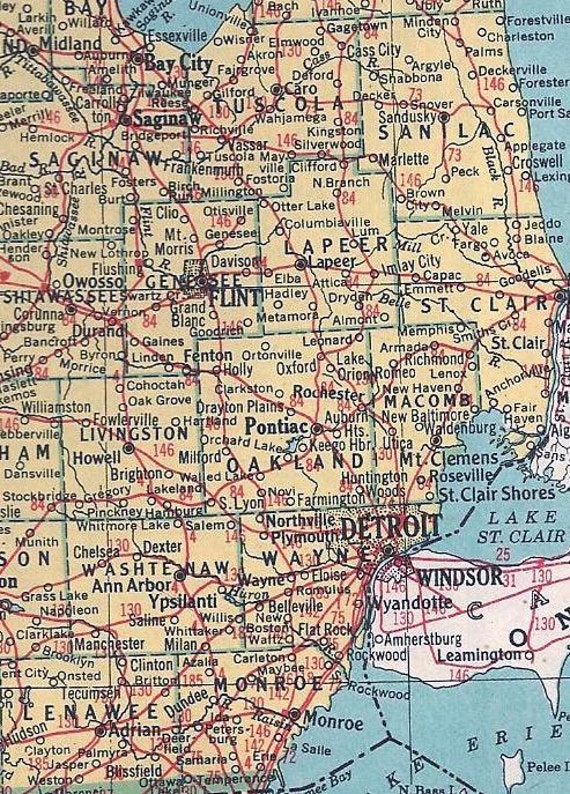
Close up of the 1949 plate of Michigan showing Detroit and it's suburbs alongside close Canadian neighbors Windsor.

The past weekend I found a Hammond's World Atlas just sat hidden on a shelf in a relatively modern home, dating to 1949 it came from a world just waking up to the aftermath of World War 2, maps show the split Germany, American had 48 states and countries still had former names - Indochina, Siam and the Soviet Union was holding strong. Each state has one full paged plate dedicated to them - as the close up of the Michigan map shows, the interlinking red lines tattooing the landscape are the long gone railroads interlinking the cities - the Interstate Freeway System seven years away (1956).

Hopefully the 1949 atlas finds a new home as it sits currently on etsy - I know if I kept it, it would be start of yet another collection, and there's only so many collections you can get away with in a one bedroom apartment while saving for a mortgage. I hope a new owner will enjoy pouring hours over the details just as much as myself. 

Wednesday, 3 October 2012

1940s hats and bags


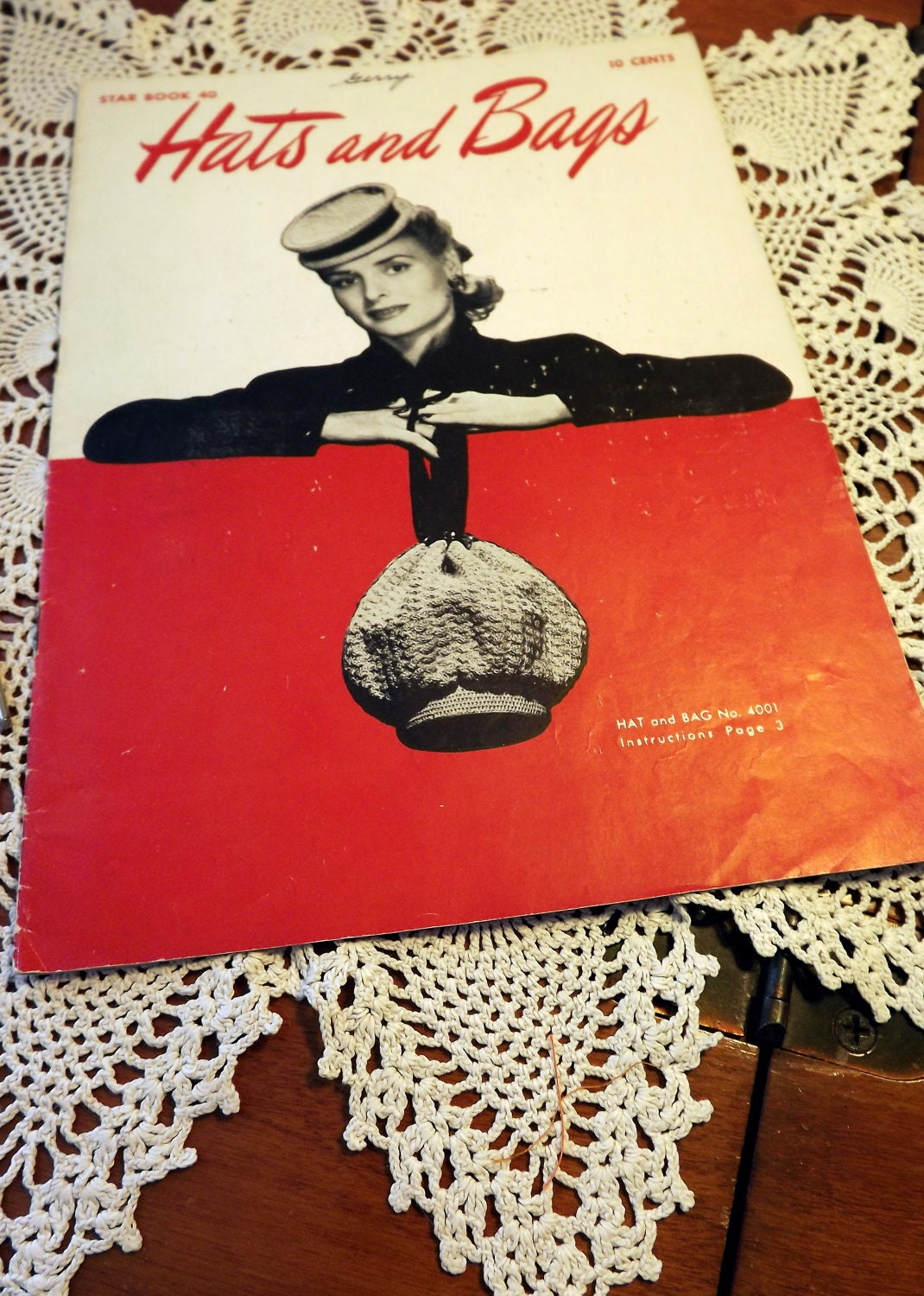
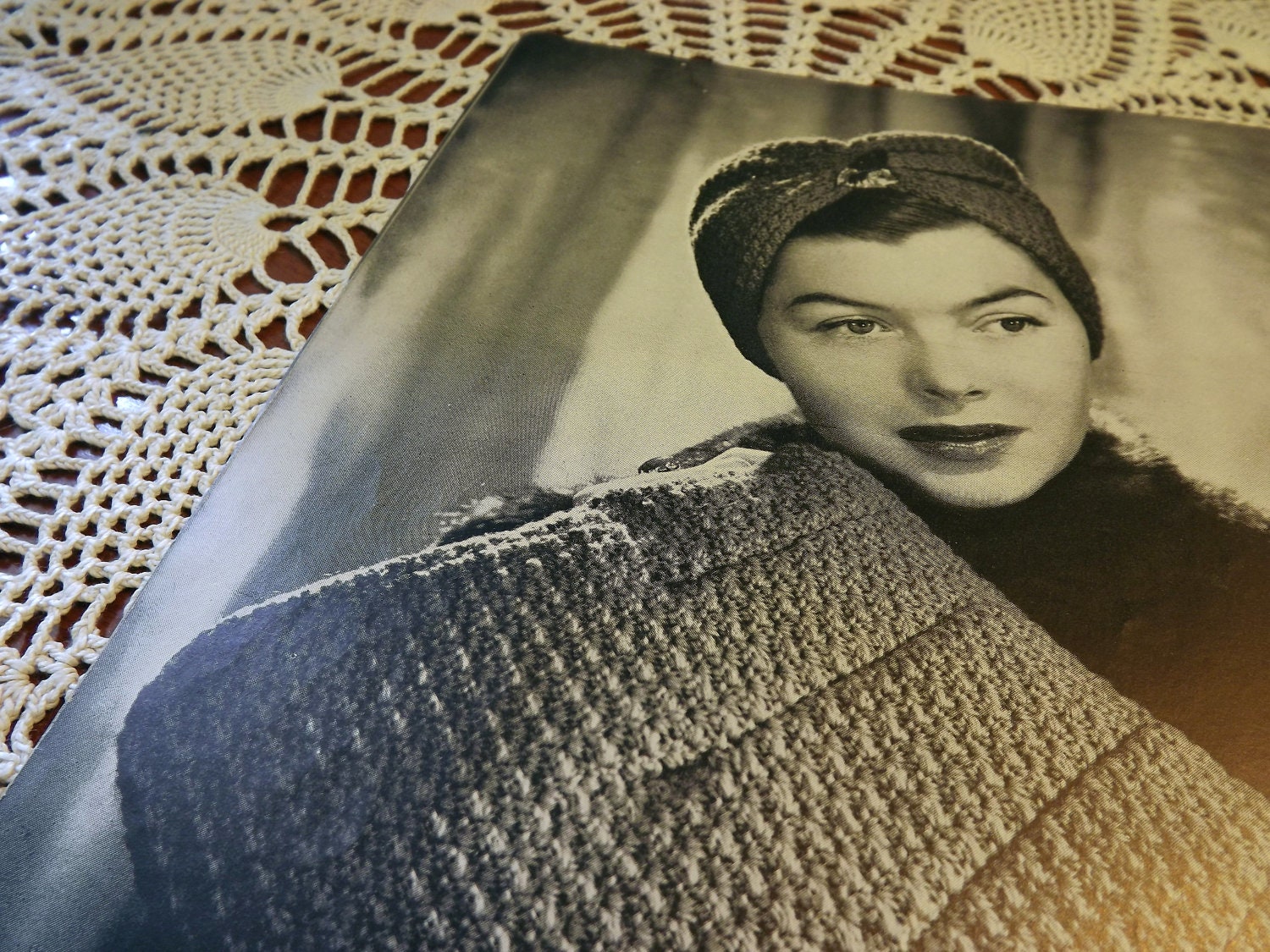
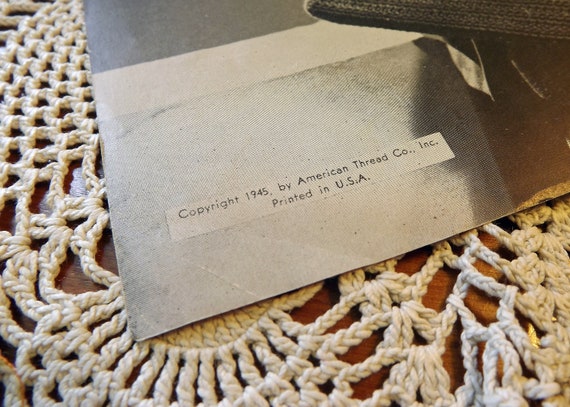
On my mission to re-home vintage crochet and knitting patterns I certainly come across some delightful publications. My favourites have to be from the 1940s were the housewife was squeezed by rations, limited material supplies and the worry of the war - but she still wanted to feel like a woman. It was a generation when crafting was the thing to do - at a time when you could just as easily make your accessories then buy them. Which is why I loved finding this 1945 American Thread Company publication Hats and Bags [Star Book #40] - one crammed with stylish designs from berets, snoods to black bags all to crochet. The women are as much on show in the images as much as the finished items and that's half the reason why I like these old patterns - the pictures are as intriguing and as delightful as the patterns.

You can currently find Hats and Bags on sale upon my Etsy store Hook, Stitch and a Treasure. A perfect place to find vintage crochet and knitting patterns waiting to be rehomed.

Tuesday, 24 April 2012

Lin Bren - for the 1940s lady


Let me introduce one of the rare occurrences of buying a compact and actually being able to find enough information to date it. Thankfully that information comes from the compact itself - not only do we know the manufacturer as Lin Bren but through the patent number we can find it's approximate date. The patent number [2425540] which is engraved beneath the mirror dates to 1947-8. So here we have a compact for the post war American lady. 

Lin Bren in turn was a leading American manufacturer, not only of compacts but an array of matching fashion accessories. Predominately creating matching sets which this compact no doubt was a part of - these sets normally consisted of a purse or clutch bag. Appearing to be produced of leather, it's made of broadcloth material and came in a section of colours [of course matching the bag] of at least green and black.

This compact came to us at a steel of $6.50 on eBay - especially for it's condition which in intact, clean and complete with it's original branded puff [I just love the chosen font they used for Lin Bren across the ribbon] and sift. Its has a fair substantial weight and build to it, it was defiantly made to last and most of all, I love that right deep red colour.

Tuesday, 10 April 2012

Collectors Club - Vintage Cookbooks

Welcome again to another edition in the collection club series of us blogger who collect, today I'm delighted to be sharing Jenns collection ...

I’m Jenn and I collect…all kinds of stuff, really, mostly related to the 1940s and ‘50s. I’m excited about the opportunity Rachael has given folks to guest blog about their collections: such a fun way to meet new people and learn a bit in the process! Rachael and I connected online through our mutual love of powder compacts. You can read more about how that collection started on my blog, powderkegcompacts.wordpress.com here. I also enjoy cooking and baking, which spawned a collection of vintage recipes and kitchenware. 

The recipe collection started accidentally. I inherited my grandfather’s 1961 edition of The Joy of Cooking, and my mother gave me some 1970s Better Homes and Gardens cookbooks when I first moved out of the house. The photos cracked me up—they were so dated! But some of the recipes were pretty good. 

When I was 23, I met two women who encouraged my love of vintage—Helen and Wendy. They were both about my mom’s age. They both LOVED poking around antique stores, auctions, and flea markets. And passing on cool things they found years ago that they no longer used—like cookbooks. Sometimes I took them just to be polite. But years later, I’ve grown to appreciate the artwork and the language.  I like seeing how ideas about health and nutrition have evolved—how we eat today as opposed to the way vegetables are classified in this 1949 recipe organizer. 

I cherish the way farm cookbooks from the first half of the 20th century assume the reader knows how to handle a sheep’s head. I enjoy looking at Ladies Auxiliary cookbooks and wondering about the group dynamics and how their recipes morphed as they were passed down through different generations. 


When I’m looking for authentic recipes for classics, I turn to my 1939 copy of The American Woman's Cookbook, Farm Journal’s Country Cookbook from 1959, or, my first edition Betty Crocker’s Picture Cookbook. In addition to cookbooks, I love recipes torn from old magazines, as these tend to have the best illustrations. I’m also a huge fan of advertising in disguise—pamphlets like “How to use and care for the Crosley Rotary Barbecue” or “77 Recipes Using Swift’ning Make Your Own Mix.” 

Vintage cookbooks are practical and affordable – besides consulting them for recipes I’ve framed old recipe cards or magazine pages in the past and used them as kitchen decorations. 

Excited to learn more about what other folks collect and how they got started! Keep the guest collector posts coming! 

*  *  *

Remember if you collect and want to take part, leave your contact details below! 

Tuesday, 14 February 2012

Some Valentines Day Lovebirds

I thought I'd go with the Valentines Day theme and show you this silver-plated Zell compact which I got rather excited about when it appeared upon Ebay. Not only did this compact come unused, with it's original puff and sift and it's original box. But also the original box it was posted in by Zell on behalf of a man serving during WWII.  


A bit of poking around on Wiki reveals that the T/5 before the senders name indicates he was a member of the Technician Fifth Grade Rank within the US Army. The addition of the T/5 helps us to date this compact because as a rank, the T/5 only existed between 1942 to 1948. Additionally a bit of detective work reveals the stamps to first released in 1938 because they bare the face of John Quincy Adams, a former president of the USA. All that is left is to assume that this compact was a Christmas gift perhaps from a brother to his sister, or father to his daughter.

Upon the compact's cover are two large exotic love birds decorated alongside orange and fruit trees, with pink and white flowers carried off around the edge upon the silver - gold design. The detailing and it's quality is immense and for being this one, being in this fine condition is rare.

Unfortunately the mirror itself needs replacing because it's come apart from the compact but that can easily be replaced. The original paper declaration of the silverplate is additionally intact and in fine condition like the powder pan. This is due to the fact that this compact has never been used therefore the chemicals within the make up haven't effected the metal or the mirror which often suffer from considerable markings and blurring over time. Having all these pieces in such good condition is incredible and was worth the money we spent on securing it.

However and wherever your spending today, if you believe in it or not, have a lovely day. I love what TJ created to celebrate this day of love - we even feature upon the photograph wall! We're using it as an excuse to go for posh three course afternoon tea on Friday which I really am so looking forward too and Joe got an extra Transformer from me for his collection. Tonight we'll just spend watching NCIS and The Big Bang Theory reruns, hopefully getting a take out and drinking wine. 

Sunday, 4 December 2011

The Redford Theatre


On Friday night we went to the Redford Threatre to see the 1947 version of Miracle on 34th Street. Detroit's Redford Theatre originally opened in 1927 as a neighborhood cinema and now remains as Detroit's only theatre with its orginal pipe organ. Along with the organ, the three storey theater is fully decorated in an ornate Japanese style, although during WWII this was removed. The national downward trend of declining cinema goers which hit during the mid 1960s and 1970s led to many of Redford's contemporaries being demolished, yet the Redford somehow managed to survive. Today the theatre is a haven to those of us who adore old films with their biweekly showings of films from the 1930s to the 1960s. 

I was expecting the theatre to be half full if that - I was wildly surprised when it was at least three quarters full [Redford has 1,571 seats] but it was good to see that many people of all ages were interested in watching such an old film on a Friday night. The night started off with a half hour slot of live organ music - mostly film scores [Sound of Music, Hello Dolly] and the odd Christmas song, even the American national anthem. Yet to be able to see an original black and white film as it was intended to be seen was incredible, and for $4 (about £2.50) you really can't go wrong and to have a couple of hours without having to think, slot out or plan wedding things was very much welcome. Saying that it's four sleeps till the big day! 

Friday, 30 September 2011

Vintage Kenmore Sewing Machine

Joe went to the Salvo's looking for a bedside cabinet for my side of the bed and came back with this American Kenmore vintage sewing machine. I'm a very lucky girl but what's even better is that it's electric  and it still works. It's model no. [117-59 - the only model made during this period and was also named the Kenmore Imperial Rotary sewing machine] was manufactured in 1942 - its a total beast of it's time, it's sleek, smooth design is much more rounded and modernised in comparison to my 1936 Singer built only 8 years before.

Kenmore [a brand name used by the Sear's company] first appeared and only stayed for one year in 1913. It was later to reappear in 1934 manufacturing until the onset of America's involvement in WWII in 1942 - the result of the shortage of materials necessary to make the machines. The closer of the war however didn't brighten the future of Kenmore who began to suffer from the withdrawal of import tariffs, as a result it was becoming increasingly more economic for the public to buy imported goods. Kenmore ended it's sewing machine history of American models in 1958, with it's name only appearing on Japanese made machines after this date.

It comes complete with it's original sewing table, i'm debating how to clean it up, maybe a good go with some furniture polish will get rid of the dents in the wood and make it shine once again. I really can't wait to get my hands upon the machine and give it a good rub down! I bet with a bit of loving it can really shine again, saying that for it's age and for being found where it was, I think it's in rather good condition. But what can I make with it first?!

But the secret about what is the best thing about this sewing is what is in the drawer to the underside of the accompanying chair ...
After I've moved i'll do some of my geeky snap happy photographs and show this girl off some more - i totally can't wait to have a full nosey in that drawer, it looks crammed full of goodies! Made my 25th birthday today a little more memorable.

Monday, 7 September 2009

Coloured London Blitz

Although coloured photographic film was available, the majority of visual records of wartime life, warfare and people remained captured in black and white with the rare exception coming from magazine publications, such again as Life magazine. Across TV and radio - most especially the BBC there has been a big recent screening of the outbreak of war with German 70 years ago. And I guess to some extent this has increased my interest in trying to hunt out and capture on my blog images regarding the more personal home and feminine side of the war.

Yet as most of the war time images are black and white in nature, it was a pleasant surprise to find these images taken in September 1940 of the carnage and fallout of Nazi bombs upon the streets, landmarks and homes of London by William Vandivert upon the website for Life magazine.


A small number of onlookers peer into the immense crater of the bomb causing a London double decker bus, we can only now assume, to drive into. The bus stop sign perches upright, the only normality in the sea of destruction of the shop fronts in the background.

Smoke from burning fires creates a hazy outlook towards St Paul's, a landscape of burnt out buildings, only the faded and greying cream façades maintaining their domination of the scene. the greying skies matching and the tension and atmospheric scene of wartime London.

Busy flat cap and waistcoating wearing workers try and clear up the rumble from a strike on what seems to be a private dwelling. The sturdy houses either side maintain their upright positioning, seemingly unaware of the hit next door, only the patterned and yellow wallpaper of the fallen house remains attached to the dwelling on the left, the opened doorways. The new space allowing us to look through to what appears to be, yet another bombed out residential street behind the trees. We can only question if the occupiers survived.

Sunday, 6 September 2009

The Wartime Feminine Spirit

During the same time of finding the image of the movie theatre showing Gone With the Wind (see the post below) Life magazine has a mass of images recording wartime London. Through my own visual interests and research exploring representations of femininties within contemporary images, I'm often drawn to comparisons historically and across societies. While most often subservient and passive to the control and power of the masculine body, it is often the feminine body which maintains and holds together the backbone of society, continuing norms and practices, this can most especially be seen and considered during WWII.

With many of the working aged male population fighting the terror of Hitler and Nazism, women became the working hands and labour in maintaining British ways of life, of working the fields, nursing, driving ambulances, working in the factories through to serving as Wrens.

These images captured by B. Scherman in September 1941, offer a femininity in touch with serving the nation but of maintaining both Britishness and their own pleasure and femininity of being a women even within a war.

Sat peacefully reading a magazine in a deserted space in London, this women wearing her Women's Auxiliary Air Force uniform sits alongside her gas mask marking the constant threat of possible German raids even when trying to catch a quiet five minutes.

The limited number of delivery boys is most overtly shown within this image of a young women her tricycle parked up as she delivers towels. Her femininity is redressed into an all in one playsuit, the surrounding streets edge in V for Victory signs and war time advertisements - even one for a theatre.

In Trafalgar Square, War Time love still has time to blossom with an English girl sitting and relaxing alongside her lover - a solider for the Canadian Army. For the moment the fear of the war is forgotten as they relax against the edge of the monument. Who knows the ending of their story? Did he return home safe?

In what seems a world and a situation far from the horrors of fighting or the bombed out homes which littered London probably only streets away from this Soho Restaurant. The waitress offering the male his food, another looking out onto the street.

Only the 'S' sign for an available air raid shelter demarks this street and even era as something abnormal. Figures slowly walk in an everyday manner along this what looks like a residential London street, the smartly dressed women, her coat fitted and her hand gasping her black handbag sauntering along this street. Her pale coat echoing the whiteness of the pole - marking the lost innocence of the period.